
A terrorist holed up in a border village in Jammu and Kashmir's Kathua district was killed by security forces on Wednesday in a more than 15-hour operation during which his partner was also shot dead and a CRPF jawan lost his life, officials said.

PDP leader Iltija Mufti alleged that she and her mother, party chief Mehbooba Mufti, were placed under house arrest in Kashmir. They were planning to visit families of victims of army firing incidents in Sopore and Kathua. Iltija Mufti criticized the restrictions, stating that comforting victims' families is being criminalized in Kashmir.

The Udhampur-based northern command is committed to eliminate the scourge of terrorism in Jammu and Kashmir, the Army said on Tuesday, as it paid tribute to four soldiers who died in a gunfight with heavily armed terrorists in Doda district.

A search operation by a joint team of security forces is underway to track down three Pakistan-based Jaish-e-Mohammad (JeM) terrorists in a forested area of Udhampur district in Jammu and Kashmir on Friday, officials said on Friday.

Police said that Makhan Din, a nephew of exfiltrated Pak terrorist Swar Din alias Swaru Gujjar, was associated with the group responsible for the July 2024 Badnotta army convoy attack that killed four army jawans.

The operation at the Keran Sector in Kupwara is still underway, the Army said.
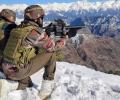
Pakistan's troops have engaged in unprovoked firing along the Line of Control (LoC) and International Border (IB) in five districts of Jammu and Kashmir, prompting retaliation from the Indian Army. This marks the eighth consecutive night of such incidents, following heightened tensions stemming from a recent terror attack in Pahalgam. Civilians residing along the LoC and IB are preparing their bunkers in anticipation of potential escalation.

The anti-terror operation was part of Indian security forces' counter-offensive Operation Asan, launched after terrorists attacked an Army convoy in the Battal area on October 28.
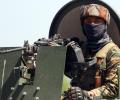
The real heroes of Operation Sindoor were not the armed forces or political leadership, but the ordinary citizens of India who refused to fall into the trap of communal provocation, asserts Colonel Anil A Athale (retd).

The Pakistan Army continued shelling along the Line of Control (LoC) in four sectors of Jammu and Kashmir, prompting a befitting response by the Indian Army, officials said on Thursday. The intensity of cross-border firing was less than Wednesday, when Pakistan Army carried out one of the most intense artillery and mortar shelling in years targeting the forward villages in J-K following missile strikes by India as part of 'Operation Sindoor'.

People along the Line of Control and International Border in the Jammu region continue to live under the shadow of death, with unexploded mortar shells fired by Pakistani troops still embedded in farmlands and residential areas even though hostilities have stopped for nearly a week. IMAGE: Kindly note that this image has been posted for representational purposes only. Photograph: / Rediff.com Despite the May 10 understanding between India and Pakistan, locals describe the border areas as a 'death trap'. Sixty-two-year-old Balvinder Singh, who returned to his home in Pargwal sector on May 14, recounted a narrow escape. "Two shells exploded in our compound, damaging our house. Three more landed on our farmland. We were terrified and told our family to stay away from the fields until the Army could help," Singh told PTI. Army engineers later came to the village and safely defused the unexploded shells, bringing a temporary sense of relief. "Fear is writ large on the faces of people to these death traps in border hamlets", he said. Scenes of destruction are evident rooftops torn apart, broken houses, windows punctured by shrapnel, and carcasses of cattle lying in pools of blood. The acrid smell of gunpowder still lingers in the air. Sardar Gurmeet Singh faced a similar ordeal. His family could not re-enter their home as a live mortar shell had sunk into the compound in a village close to the International Border. "The army's bomb disposal squad removed it after four days, allowing us to finally enter, back home," he said. Indian Army engineers have launched a sweeping clearance operation across border districts, defusing over 80 unexploded shells in the past five days -- including 6 in Pargwal, 19 in Rajouri, 42 in Poonch, and 12 along the IB. "These shells, mostly 120 mm calibre, have a range of 15 to 30 km and pose a serious threat to both civilian and military targets," an Army officer said. "Many of them were fired by Pakistan during recent hostilities." On May 7, the Indian Army launched Operation Sindoor, conducting precision strikes on nine terror hubs in Pakistan and Pakistan-occupied Jammu and Kashmir (PoJK) in response to the April 22 terror attack in Pahalgam that killed 26 people, most of them tourists. The subsequent retaliation by Pakistan pushed the region to the brink of war. From 7 to 10 of May, 27 civilians were killed and over 70 injured in Pakistani shelling in the Jammu region. Farid Din Gujjar, a resident near the border, expressed fear about returning to his fields. "Several shells created deep craters in our paddy land. We cannot resume work until all unexploded ordnance is cleared. It's a death trap," he said. Army units, in coordination with Jammu and Kashmir Police, have evacuated high-risk zones and issued stern warnings to residents not to touch any suspicious objects or unexploded shells. In one major operation, 42 live shells were safely destroyed in the Poonch villages of Jhullas, Salotri, Dharati and Salani. "All safety protocols were followed. The shells posed a serious danger to local lives," an Army spokesperson said, calling the effort a 'continued commitment to protect civilians and restore normalcy'. Poonch saw the vast majority of deaths due to shelling. Security officials said that Pakistan used a mix of mortar shells, armed drones, and missiles during the shelling spree, specifically targeting civilian habitations and border towns in Jammu, Samba, Kathua, Rajouri, and Poonch. As clearance operations continue, the border residents are slowly returning to their homes, but with caution, fear, and lingering uncertainty about shelling that may yet happen in the future.

The reopening brought a sense of relief to students, teachers, and parents across the region.
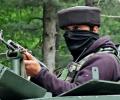
The firing exchanges are taking places in five districts out of seven border districts of Jammu and Kashmir. So far, there has been no firing reports along International Border in Samba and Kathua districts.
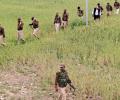
The bodies of a teenager and his two relatives were found near a waterfall in Jammu and Kashmir's Kathua district three days after they went missing. The Jammu and Kashmir Congress has demanded a high-level investigation into the incident. The police have ruled out any terror angle, but the exact cause of death is unknown and will be determined by a postmortem.

A senior police officer said four heavily-armed terrorists stopped a vehicle on the Jammu-Pathankote national highway on Friday morning and opened fire at the occupants of the vehicle, killing one person on the spot and seriously injuring three others.

A Pakistani intruder was also killed in the exchange of fire, they added.

The DGP, along with additional director general of police (law and order) Vijay Kumar and Jammu zone additional director general of police Anand Jain, visited Jammu-based White Knight Corps and interacted with General Officer Commanding Lt Gen Navin Sachdeva, the army said.

Suspected drones were observed along the International Border in Samba district of Jammu region on Monday, while armed forces downed a 'surveillance drone' in Punjab's Jalandhar district.

The encounter took place when the troops of Rashtriya Rifles and Special Operations Group of J&K Police launched a joint cordon and search operation at Dhari Gote Urarbagi in Desa forest belt, some 55 km from Doda town, late Monday evening, the officials said.

Despite a massive search operation, terrorists affiliated with Kashmir Tigers, a shadow group of Pakistan-based Jaish-e-Mohammad outfit, who have recently infiltrated into the country, remain untraced.

The Border Security Force (BSF) launched "Operation Sindoor" in retaliation to unprovoked firing and shelling by Pakistani Rangers along the International Border (IB) in Jammu. BSF troops destroyed three terrorist launch pads and targeted 76 Pakistani border outposts and 42 forward defence locations. The BSF action came after Pakistan launched heavy firing and shelling on 60 Indian posts and 49 forward positions, reportedly providing cover for an attempted infiltration by 40-50 terrorists.

To counter the threat and thwart the attempts of Pakistan-based handlers to spread terror in the peaceful areas of the region, officials said the Army, in close synergy with the police and the central armed police forces, has launched relentless operations in the vulnerable regions, especially in the dense forests.
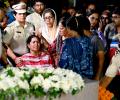
The dastardly dimensions of the attack are gradually sinking in even as the Government of India announced its immediate diplomatic and other retaliatory measures. It is generally expected to be followed up with punitive military action across the LoC, sooner than later, observes Mohammad Sayeed Malik, the distinguished commentator on Kashmir affairs.
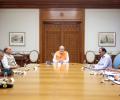
'The government has to explain (to the army, air force and navy chiefs) whether they want a punitive strike, a deep punitive strike, or whether they want limited war or an all-out war, will it be a circumscribed war or will it be a shallow attack along the border.'
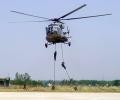
'Pakistan cannot sustain a war with India for more than four days. They are in such dire straits. At best they can sustain war for one week.'

Here is a chronology of terror incidents in the region this year.

Terrorism and insurgency in J&K had subsided when India demolished East Pakistan -- for the simple reason that Pakistan understands power. We need to follow Chanakya's dictum of Saam, Daam, Dand, Bhed for strategising against Pakistan, asserts Lieutenant General Prakash Katoch (Retd). The ground truth is that unless we are prepared to acknowledge our shortcomings, including massive intelligence failures, punish those responsible and take corrective actions, we will continue in the same vein, asserts Lieutenant General Prakash Katoch (Retd).
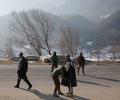
'I am committing suicide because I was subject to torture and humiliation in the police station.'
'If they aim to remain aligned with the public sentiment, as any democratic government should, then they must respond. Why else would the prime minister have cut short his visit to Saudi Arabia? And why would he have instructed the home minister himself to travel to Srinagar to assess the situation firsthand? This suggests that something is indeed being planned. I am quite certain of that, although the exact form it will take remains to be seen.'
'It was inspired by the Hamas attack and was like their attack -- well planned and well executed.'
'Diplomatic and economic responses are first announced and then implemented. A military response is announced only after it is done.'

Five army personnel were killed and six injured on Monday when terrorists ambushed their vehicle in the remote Machedi area of Jammu and Kashmir's Kathua district, officials said.
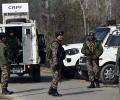
A massive search operation is underway to flush out the terrorists, who are believed to have recently infiltrated from Pakistan, they said.

Security forces on Tuesday morning gunned down two terrorists holed up in a forest area near a village in the Akhnoor sector in Jammu and Kashmir, taking the number of militants killed in the 27-hour-long gunfight near the Line of Control (LoC) to three, officials said.

The home minister will also review the preparation for the annual Amarnath pilgrimage set to start on June 29.

The casualty comes barely a week after multiple ceasefire violations by Pakistani troops along the LoC in north Kashmir left 11 people, including five security personnel, dead on November 13.

The bodies of two village defence guards (VDG) killed by terrorists were found near a rivulet on Friday during a massive search operation in Jammu and Kashmir's Kishtwar district, officials said.
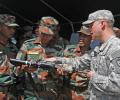
The frequent use of these assault rifles by terrorists in Jammu and Kashmir, according to experts, is a consequence of the US Army leaving behind arms and ammunition while pulling out from Afghanistan in 2021 and is a cause of concern due to the more lethal nature of the steel bullets used.

They said police parties fanned out to find them amid reports that they had been abducted and killed by terrorists.

Reliance on technical intelligence has not been fruitful as terrorists use online activity to mislead authorities. Officials feel that there is an urgent need for heightened surveillance to counter foreign terrorists, especially in the Jammu region.
